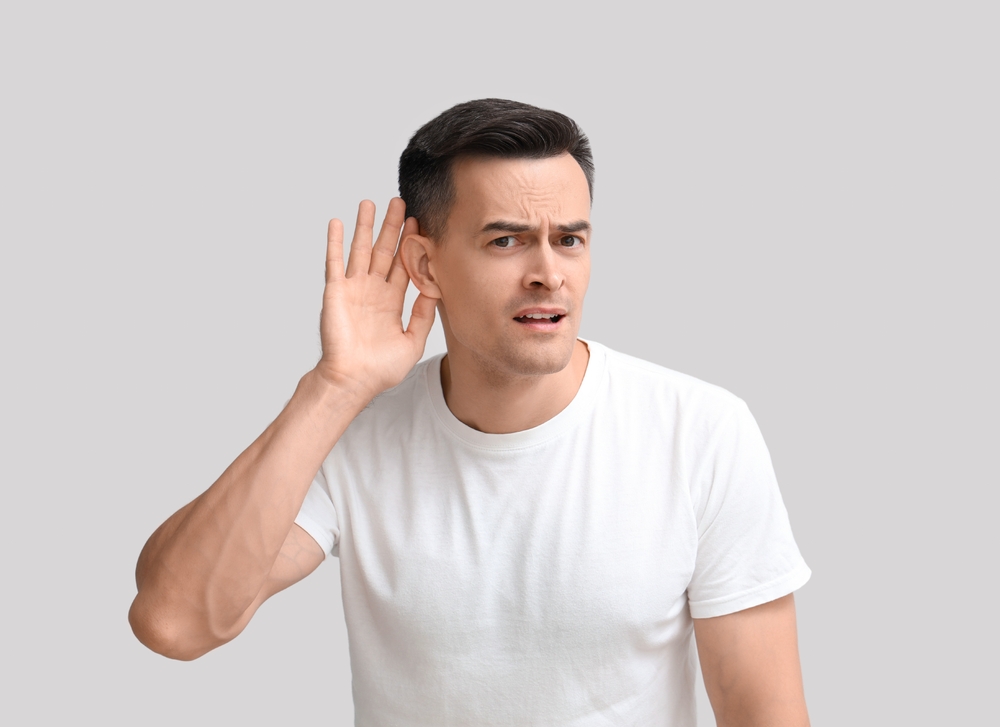
Do you often experience profound mental depletion following extended dialogue or crowded social events?
You may assume you’re just tired, stressed, or overwhelmed. And it’s true that for introverts or people with sensory issues, social situations can be exhausting. Frequently, this specific type of burnout is actually triggered by chronic auditory fatigue.
Auditory fatigue happens when your brain has to work harder to process sound. If auditory input is degraded, the brain must engage in constant phonemic restoration to bridge the gaps in speech. Accumulated listening strain eventually manifests as the profound exhaustion associated with auditory fatigue.
Many people mistake auditory fatigue for ordinary tiredness. This type of burnout often points toward a functional decline in the auditory system. Only a specialized assessment can isolate the role of hearing loss in your current energy levels. If you notice this pattern happening regularly, talk to your provider about determining whether hearing loss is contributing to your symptoms.
Identifying the Core Drivers of Listening Exhaustion
Several factors can force the brain to work harder during listening, increasing the risk of auditory fatigue.
The Impact of Unmanaged Hearing Loss
One of the most common causes is untreated hearing loss.
When acoustic signals are incomplete, the brain engages in heavy “top-down” processing to reconstruct speech. The mental labor required for constant speech reconstruction causes energy levels to plummet during social interaction.
How Background Noise Triggers Fatigue
Busy environments can worsen auditory fatigue. Environments with significant background chatter make it difficult for the brain to isolate and prioritize relevant audio signals.
In multi-source sound environments, the brain must exert massive energy to suppress irrelevant noise. This biological workload frequently triggers cognitive overload, particularly when any level of hearing loss is present.
The Role of Tinnitus in Auditory Fatigue
Tinnitus—the perception of internal ringing—exacerbates fatigue by increasing the sheer volume of data the brain must process.
Sound distortion caused by hearing loss can further increase strain, forcing the brain to work even harder to understand speech.
How to Recognize the Onset of Auditory Fatigue
Auditory fatigue can affect both mental focus and overall energy levels. Common signs include:
- Feeling mentally drained after conversations
- Reduced focus during professional or social group settings
- Development of “listening headaches” after long social events
- Feeling “on edge” or frustrated when trying to follow a conversation
- Social retreat to avoid the stress of auditory processing
- Compulsive need for rest after navigating a noisy environment
Recurring instances of these symptoms suggest that your auditory processing system is operating at an inefficient level.
Why Hearing Loss Makes Your Brain Work Harder
Clear auditory input allows the brain to interpret sound with virtually no conscious effort. Conversely, hearing loss forces the brain to redirect energy from other executive functions to assist in sound decoding.
Researchers describe this as increased cognitive load. It involves the brain siphoning energy from memory retrieval and focus to prioritize basic speech understanding. This continuous drain on the brain’s “battery” leads to chronic daily exhaustion. Even short conversations may require more concentration than they should.
Why a Hearing Test is the First Step to Recovery
A formal auditory screening is the most effective way to determine why you feel so drained. During a comprehensive hearing test, an audiologist will measure how well you hear different tones and speech sounds. An audiologist may simulate real-world noise to see how your brain manages complex auditory environments.
The data from your exam will determine if your fatigue is rooted in a physiological hearing deficit. By catching these changes in their infancy, you can implement solutions before they damage your social and professional life.
The Benefits of Audiological Rehabilitation
The right hearing treatment acts as a “pressure release valve” for the brain’s processing centers.
Modern hearing aids improve sound clarity by amplifying important speech frequencies and reducing background noise. Consequently, the brain receives a high-fidelity signal that requires no guesswork or phonemic restoration.
With restored hearing clarity, you will likely see a boost in:
- General energy levels from morning to evening
- Increased attention span during long discussions
- A return to enjoying busy restaurants and gatherings
With less strain on the brain, everyday interactions can feel more natural again.
Is it Time for a Professional Hearing Check?
You should prioritize an audiological consultation if the following conditions apply:
- Socializing feels like a high-intensity mental workout
- You are increasingly told that you are missing parts of the conversation
- You struggle to follow discussions in noisy environments
- Social withdrawal is becoming your default response to difficult acoustics
Seeking prompt audiological care is the most effective way to reclaim your energy and social confidence.
What You Need to Know About Auditory Fatigue
Distinguishing Between Exhaustion and Impairment
No—fatigue is the “symptom” (burnout), whereas loss is often the “cause” (the impairment). Most people experience auditory fatigue as a direct consequence of their hearing loss.
Can hearing aids reduce listening fatigue?
Yes—current technology is specifically designed to minimize the cognitive cost of communication.
Can Auditory Fatigue Be Cured?
With the right treatment, the exhaustion associated with auditory fatigue is often completely reversible.
Reclaiming Your Energy After Social Events
Daily dialogue should not be a source of profound cognitive depletion. When simple listening becomes a chore, it is a sign of an inefficient auditory processing loop.
Begin your journey back to energy by booking a comprehensive hearing test now. Reclaim your social life and your energy by getting the truth about your auditory health today.
