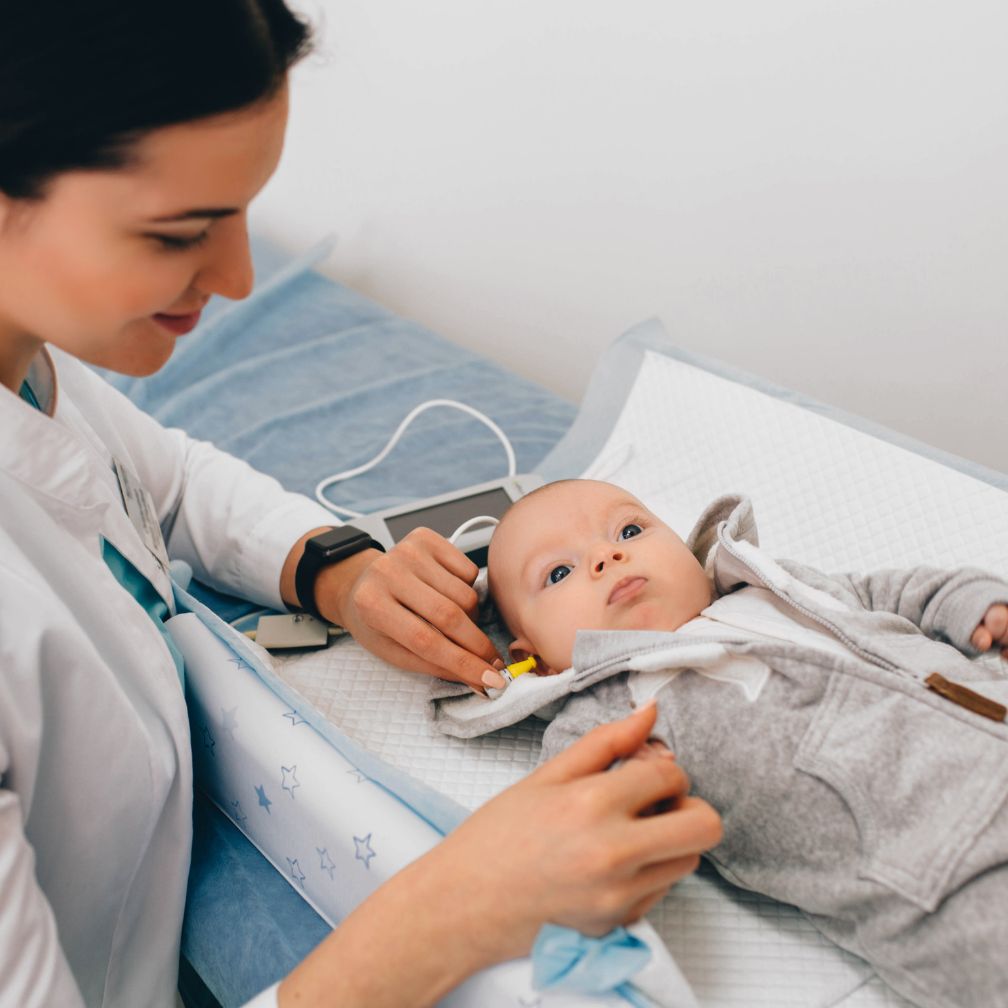
For recent parents, learning that their baby shows hearing challenges remains extraordinarily shocking and painful. But the hopeful fact stands that through swift diagnosis and clinical therapy, kids experiencing auditory impairment can genuinely prosper wonderfully. Beyond doubt, these children can build spoken language, interpersonal skills, and solid relationships across their world, shaping a truly wonderful life!
Integrating standard hearing devices with modern cochlear technology delivers two outstanding solutions for supporting infants who exhibit hearing loss. In the passage below, we evaluate their individual operations and outline how to find the best choice for your infant.
Unpacking the Foundations of Infant Hearing Loss
Hearing deficits within babies frequently result from diverse medical influences, including:
- Underlying genetic predispositions (even in the absence of documented familial lineage)
- Specific congenital infections including cytomegalovirus (CMV) or rubella pathogens
- Birth-related trauma, including neonate oxygen loss or preterm birth
- Specific therapeutic drugs given inside neonatal intensive care units
What constitutes the single most vital measure? Swift clinical diagnosis. Owing to this mandate, babies in the United States receive standardized auditory screening preceding their departure from the facility. Clinical pediatric audiology doctors consistently follow the established “1-3-6” operational timeline:
- Initial screening administered before 1 month of life
- Confirmed hearing diagnosis established within 90 days of life
- Formal intervention (deploying corrective equipment or speech habilitation) established prior to 6 months of age
Meeting these core timeline goals offers infants their highest probability for superior speech, verbal communication, and brain maturation. If you require additional direction on these clinical screenings, your child’s pediatrician will gladly guide you!
Infant Hearing Aids: Overview & Benefits
For young children showing mild to severe auditory impairment, wearable hearing aids frequently remain the recommended first step. Such compact, fitted instruments amplify incoming audio helping infants distinguish human speech and natural sounds more clearly.
Advanced pediatric hearing aids operate as:
- Fully safe and comfortable for young infants a few weeks post-birth
- Engineered with flexible, soft ear impressions that adjust alongside the infant’s growth
- Engineered with child-resistant battery compartments along with custom pediatric safety options
- Custom-calibrated by a pediatric audiology specialist to accommodate your infant’s exact hearing needs
As your baby grows, their wearable units will require frequent clinical updates to preserve physical comfort and functional efficacy.
Cochlear Implants in Infant Auditory Care
If an infant is diagnosed with severe to profound sensorineural impairment that shows insufficient improvement with standard hearing aids, specialists routinely suggest a cochlear implant. Unlike hearing aids, cochlear implants:
- Are integrated into the inner ear through surgery bypassing non-functional outer hair cells
- Completely bypass dysfunctional structures across the inner ear system
- Convert surrounding audio into precise electrical signals that stimulate hearing nerve pathways directly
Dedicated pediatric cochlear devices serve as:
- FDA-approved for pediatric patients as young as 9-12 months
- Remarkably effective when paired with early auditory-verbal therapy and consistent family engagement
- Prescribed solely following a thorough evaluation by an audiologist and ENT specialist
This evaluative framework encompasses neuroimaging scans, advanced hearing evaluations, and in-depth discussions surrounding achievable long-term goals.
Hearing Aids Versus Cochlear Implants: A Direct Comparison
- Mild to severe hearing loss: Hearing Aids; Severe to profound hearing loss requires Cochlear Implants
- Non-Invasive external placement: Hearing Aids; Surgical internal implantation: Cochlear Implants
- Acoustic volume boosting: Hearing Aids; Electrical signal stream conversion: Cochlear Implants
- Application starts during early infancy: Hearing Aids; Implantation starts at 9-12 months: Cochlear Implants
Final Takeaways: Navigating Infant Hearing Solutions
If your infant is diagnosed with a hearing condition, you have access to outstanding technological paths and plenty of support. By partnering with skilled pediatric auditory specialists, countless infants successfully cultivate communication skills that mirror those of their age group.
Whether your baby benefits most from custom hearing aids or a cochlear implant system, acting swiftly can make a lifelong difference.
Have you got specific questions concerning your newborn’s hearing abilities? Reach out to us today for a full evaluation and personalized care plan.
