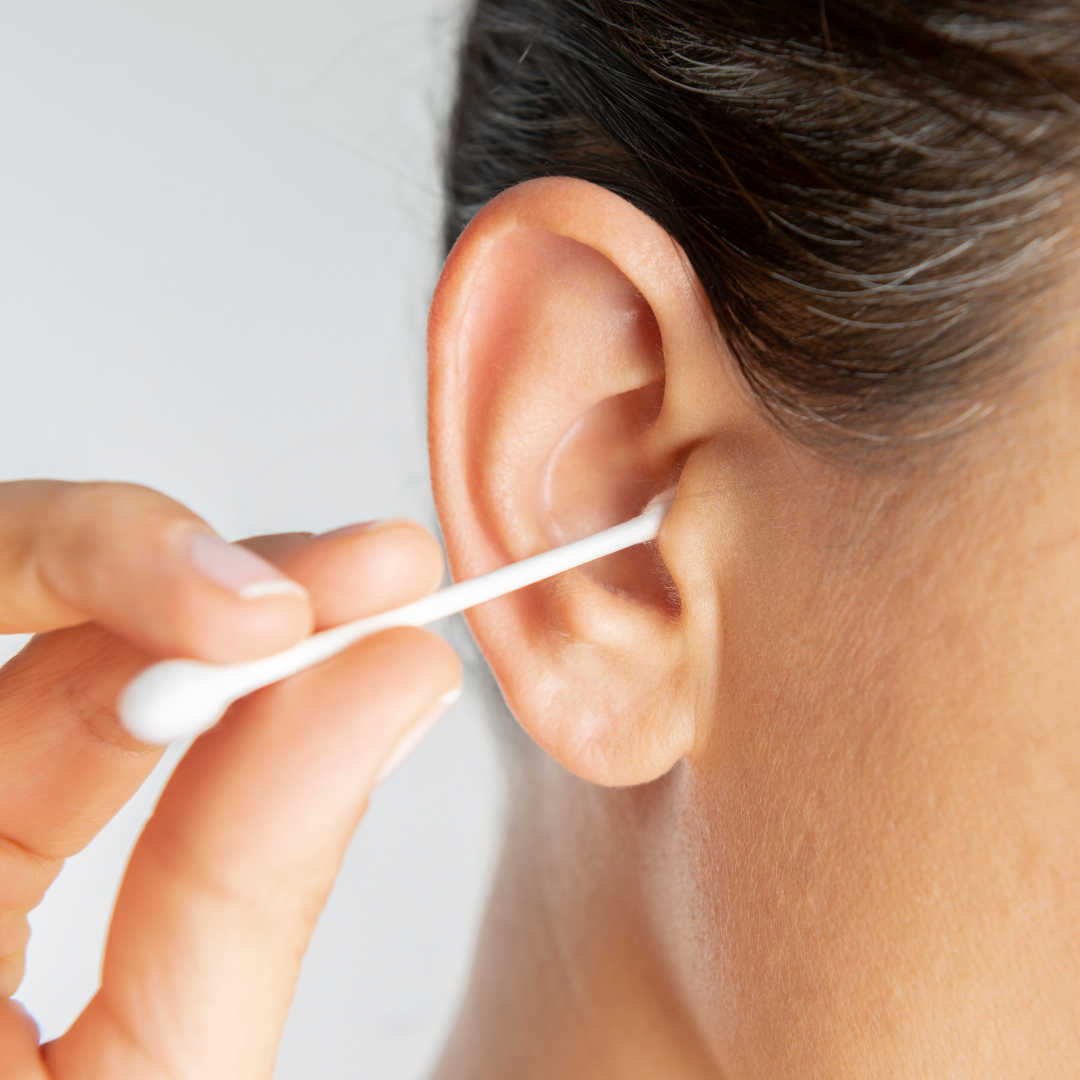
Even though cotton swabs seem practical for routine hygiene, probing the inner canal creates deeper impactions and threatens long-term ear health. Our clinic establishes whether cerumen requires physical removal and identifies the safest protocols for your individual ear anatomy. Ear canals typically maintain themselves without assistance; nonetheless, if stubborn buildup develops, we help individuals safely eliminate excess wax.
The Hidden Dangers of Cleaning Ears with Q-Tips
Earwax, or cerumen, is not dirt. It traps dust and debris, helps limit bacterial growth, lubricates the ear canal, and protects its sensitive skin. Jaw movement and normal skin migration gradually carry old wax toward the ear opening, where it flakes away or washes off during bathing.
Pushing a cotton applicator past the canal opening disrupts this natural physiological transport. Even if the swab gathers a trace of surface cerumen, it routinely compacts the remaining mass against the eardrum. Continuous swab usage packs loose secretions into a hardened mass, generating an occluded sensation that tempts patients into additional probing.
While cotton swabs are acceptable for cleansing the external folds of the pinna, they must never pass into the ear canal.
Types of Ear Injuries Caused by Cotton Swabs
The delicate dermal lining of the auditory canal is remarkably thin and susceptible to lacerations. Minor physical scratches induce pain, trigger localized bleeding, and invite bacterial colonization, increasing outer ear infection rates. Additionally, the swab tip can shear off and lodge itself securely inside the ear canal.
Common mechanical traumas from swabs include:
- Severe earwax impaction near the tympanic membrane
- Cutaneous tearing, swelling, canal inflammation, or bleeding
- Acute otitis externa or canal infection
- Retained cotton tips or foreign debris inside the canal
- Tympanic membrane perforation or tear
- Ossicular chain disruption or damage behind the tympanic membrane
- Temporary or permanent hearing changes
- Ringing in the ears, balance disruption, or sharp ear pain
Although catastrophic damage remains relatively rare, unexpected arm bumps, hand slips, or excessive insertion depth easily cause acute harm.
Clinical Guidelines on Earwax Removal Frequency
Most people do not need to remove earwax on a schedule. Functional ear canals naturally evacuate wax, and everyday washing clears away deposits on the outer ear. Aggressive hygiene removes protective lubricants, provokes skin inflammation, and heightens the likelihood of infection or cerumen buildup.
Cerumen removal is indicated when buildup obstructs the canal, hinders tympanic membrane visualization, degrades hearing aid performance, or generates symptoms.
Safe Protocols for Managing Cerumen at Home
If earwax produces no discomfort or auditory decline, leaving it undisturbed is consistently the safest choice. Gently wipe the outer ear surface with a damp washcloth and allow internal self-cleaning mechanisms to work.
Should cerumen require breakdown, our team may recommend commercial cerumen-removal drops or formulas featuring saline, mineral oil, glycerin, or carbamide peroxide. Ensure you use the exact recommended volume and follow the labeled duration instructions carefully. Stop if the drops cause pain, marked dizziness, rash, or worsening symptoms.
Performing home ear irrigation carries distinct risks and requires prior professional evaluation and hands-on technique instructions. Under no circumstances should you ever use a pressurized dental oral irrigator in the ear. Avoid hazardous gadgets including ear candles, sharp metal loops, camera-assisted tools, hair clips, and home vacuum extractors. Such unapproved devices easily burn canal walls, cut fragile skin, puncture the eardrum, or drive cerumen deeper.
When Is Professional Earwax Extraction Necessary?
Arrange a consultation when aural fullness continues after drop therapy, wax is severely impacted, or home interventions prove ineffective. Expert removal is the safest path for patients who struggle to hold still, individuals with narrow ear canals, hearing aid wearers, or those with surgical contraindications to irrigation.
Seek an examination for:
- Sharp ear pain, chronic itching sensations, or localized tenderness
- Otorrhea containing blood, active pus, serous fluid, or an unpleasant odor
- Pyrexia or localized tissue swelling surrounding the ear canal
- New tinnitus or dizziness
- Sudden hearing drops or auditory deficits that remain after wax removal
- Suspected tympanic membrane tears or retained cotton foreign bodies
- Chronic cerumen impactions that clog or disrupt hearing aids
Any rapid-onset hearing loss in one ear must be evaluated as an emergency rather than dismissed as a wax plug. Fast diagnostic testing reliably differentiates a conductive wax plug from an acute, time-sensitive sensorineural emergency.
Professional Techniques for Cerumen Removal
We first examine the canal with an otoscope or microscope to confirm that wax is present and look for infection, injury, or an eardrum perforation. The most appropriate removal approach is determined by wax texture, canal structure, patient background, surgical history, and individual tolerance.
Professional options include:
- Therapeutic cerumenolytic solutions instilled before or during treatment
- Safe low-pressure irrigation using body-temperature solutions on intact tympanic membranes
- Gentle micro-suction performed under clear binocular visualization
- Mechanical extraction using sterile ear loops, specialized curettes, or micro-forceps
Continuous visual monitoring enables the practitioner to navigate around sensitive epithelial tissue and pause immediately if discomfort arises. Resolving highly compacted or dry earwax often involves integrating multiple clinical removal techniques. Following cerumen extraction, a complete post-procedure examination verifies that the canal epithelium and tympanic membrane are intact. If fullness, tinnitus, dizziness, or hearing difficulty continues, additional testing can identify another cause.
Book a Professional Earwax Evaluation and Removal
If you notice a blocked sensation or changes in auditory clarity, contact us for an evaluation rather than inserting a Q-Tip. During your consultation, we examine current symptoms, prior ear surgeries, hearing aid habits, home remedies, and physiological factors that drive wax accumulation. Connect with our practice today to reserve an appointment for safe, professional earwax removal.
